Vital Signs Scotland

Frans Bedford-Visser

The Importance of Having Trained First Aiders in the Workplace

Shows worker collapsed at building site receiving first aid

The Importance of Having Trained First Aiders in the Workplace

Accidents can happen anywhere. From a slip in the office kitchen to a fall on a construction site, no workplace is immune. That’s why having trained First Aiders isn’t just a legal requirement for many businesses in the UK—it’s an essential part of creating a safe, supportive working environment.

In this post, we’ll explain why First Aid training is so important, how it benefits your business, and how you can ensure your team is fully prepared.

What is a First Aider?

A First Aider is someone who has completed accredited training to provide immediate help in an emergency. They are equipped to:

  • Assess a situation quickly and safely
  • Deliver CPR and other life-saving interventions
  • Manage common injuries such as bleeding, burns, and fractures
  • Provide support until professional help arrives

In the UK, First Aid training must meet Health and Safety Executive (HSE) standards. The most common courses include:

Why is First Aid Training So Important?

1️⃣ Legal Compliance

Under the Health and Safety (First-Aid) Regulations 1981, employers must ensure adequate First Aid provision in the workplace. This includes:

  • Appointing trained First Aiders
  • Providing appropriate First Aid equipment and facilities
  • Informing staff how to get help in an emergency

Failure to comply can lead to fines, legal action, and reputational damage. Read more on the HSE website.

2️⃣ Life-Saving Interventions

In an emergency, every second counts. Trained First Aiders can:

  • Perform CPR and use an AED
  • Stop severe bleeding
  • Manage choking incidents
  • Assist with heart attacks and strokes

Their quick action can save lives.

3️⃣ Reduce Risk and Build a Safety Culture

Having trained First Aiders demonstrates your commitment to safety. It helps:

  • Reduce workplace accidents and injuries
  • Build a positive, supportive workplace culture
  • Increase staff confidence and morale

4️⃣ Minimise Disruption

A prompt response to incidents can:

  • Reduce downtime
  • Minimise the need for hospital visits
  • Help staff return to work more quickly

5️⃣ Enhance Your Reputation

Demonstrating strong safety standards shows clients, customers, and employees that you value their wellbeing. This builds trust and can set your business apart from competitors.

Who Needs First Aid Training?

Almost every business should have trained First Aiders, but the level of training depends on your workplace:

A First Aid Needs Assessment will help you decide the right number of First Aiders and courses for your business.

How to Get First Aid Training for Your Team

At Vital Signs Scotland, we provide accredited First Aid training across Scotland and the UK. Our courses are:

✅ Compliant with HSE, SQA, and OFQUAL standards
✅ Delivered in-person, online, or as blended learning
✅ Taught by experienced trainers with real-world emergency response expertise

Our popular courses include:


Ready to Protect Your Workplace?

📞 Call us on +44 (0)1506 333310
📧 Email:
info@vitalsignsscotland.co.uk
Or visit our
Contact Page to get started.

Explore all our First Aid Courses to find the right training for your team.

Further Reading


by Frans Bedford-Visser 28 March 2026
Fire safety is one of the most tightly regulated areas of workplace health and safety—yet in many organisations, it quietly becomes a tick-box exercise. Policies are written. Extinguishers are installed. Training certificates are filed away. And everyone assumes the risk is “managed”. Until it isn’t... ⚠️ The Problem with Tick-Box Fire Safety On paper, everything can look compliant: A Fire Risk Assessment has been completed Fire extinguishers are in place and serviced Staff have attended training—at some point Evacuation plans exist But compliance does not equal capability. Fire safety fails not because systems don’t exist—but because people don’t know how to act under pressure. 🔥 How Fires Really Escalate Most serious fires don’t begin as major incidents. They start small—often manageable. What determines the outcome is what happens next: A staff member uses the wrong extinguisher The fire type is misidentified (e.g. lithium-ion battery involvement) Someone attempts to fight a fire that should have triggered immediate evacuation Evacuation is delayed, disorganised, or incomplete Within minutes, a controllable situation can escalate into: Significant property damage Business interruption Risk to life Long-term operational and financial impact 🧯 The Hidden Risk: False Confidence One of the most dangerous outcomes of tick-box training is false confidence. Staff may believe they are prepared because: They’ve “done the course” They know where the extinguishers are They’ve read the procedure But in a real incident: Stress affects decision-making Situations evolve rapidly Assumptions can be wrong Confidence without competence is a liability. ⚖️ Legal Compliance vs Real-World Readiness Under the Regulatory Reform (Fire Safety) Order 2005 and the Fire (Scotland) Act 2005, employers must: Conduct a suitable and sufficient Fire Risk Assessment Provide appropriate fire safety training Appoint competent persons (e.g. Fire Marshals where required) However, the legislation does not reward paperwork—it expects effective implementation. If staff cannot respond correctly in the moment, compliance has failed in its purpose. 🎯 What Effective Fire Safety Looks Like Moving beyond tick-box fire safety means focusing on practical competence: ✔ Scenario-Based Training Staff should understand how fires behave and how different risks (such as electrical or lithium battery fires) change response. ✔ Correct Decision-Making Knowing: When to tackle a fire When to withdraw When evacuation is the only safe option ✔ Extinguisher Competence Understanding: Fire classes Extinguisher types Limitations and risks of incorrect use ✔ Structured Evacuation Clear, practised procedures—not assumptions. ⏱️ The First 60 Seconds Matter Most In almost every fire incident: The first 60 seconds determine whether the situation is controlled—or escalates. Not policies. Not senior leadership. But the actions of those on the ground. 💼 The Business Case for Getting It Right Fire safety is not just a compliance issue—it’s a business continuity issue. Poor response can result in: Total loss of premises Closure of operations Loss of staff confidence Reputational damage Impact on surrounding businesses In contrast, effective training: Reduces risk Improves response time Protects people and assets Supports legal compliance ✅ How Vital Signs Scotland Supports You At Vital Signs Scotland, we focus on practical, real-world fire safety training that goes beyond theory. Our Fire Safety and Fire Marshal courses are designed to ensure your team can: Identify risks early Make correct decisions under pressure Use fire equipment safely and appropriately Execute controlled and effective evacuations Because when it comes to fire safety: It’s not what’s written in your policy—it’s what your people do that matters. 🚀 Take the Next Step If your fire safety training feels like a tick-box exercise, it’s time to reassess. 👉 Explore our Fire Safety courses and ensure your team is truly prepared: https://www.vitalsignsscotland.co.uk/courses
by Frans Bedford-Visser 27 March 2026
Can You Die from a Heart Attack? Understanding the Difference Between Heart Attack and Cardiac Arrest
by Frans Bedford-Visser 17 February 2026
Fire Safety Awareness in the Workplace: Legal Responsibilities Under the Fire (Scotland) Act 2005
First Aid at Work training across Scotland
by Frans Bedford-Visser 20 January 2026
Providing appropriate first aid provision in the workplace is a legal requirement under UK health and safety law. However, many employers are unsure whether they need First Aid at Work (FAW) or Emergency First Aid at Work (EFAW) training — and choosing the wrong one can leave gaps in compliance and staff safety. Understanding the difference between FAW and EFAW helps employers meet their legal duties while ensuring staff receive the right level of care when it matters most. What Is Emergency First Aid at Work (EFAW)? Emergency First Aid at Work (EFAW) is a one-day course designed to equip individuals with the skills to respond to life-threatening emergencies in low-risk workplaces. EFAW covers: Assessing an incident CPR and use of an AED Choking Severe bleeding Shock Minor injuries It focuses on immediate response until professional medical help arrives. What Is First Aid at Work (FAW)? First Aid at Work (FAW) is a three-day course that provides a broader and more in-depth level of training, suitable for higher-risk workplaces or larger organisations. FAW includes everything in EFAW, plus: Head, spinal, chest, and eye injuries Fractures and dislocations Burns and scalds Major illnesses (e.g. heart attack, stroke, epilepsy, asthma) Ongoing casualty care and monitoring FAW-trained first aiders are equipped to manage more complex situations for longer periods. Which Industries Is EFAW Best Suited To? EFAW is generally suitable for low-risk workplaces, such as: Offices and administrative environments Retail premises Libraries Small shops Low-risk customer service roles In these settings, the likelihood of serious injury is lower, and EFAW usually meets legal requirements following a first aid needs assessment. Which Industries Should Choose FAW? FAW is more appropriate for higher-risk or complex workplaces, including: Construction and engineering Manufacturing and warehousing Care homes and healthcare settings Education (schools, colleges) Hospitality and catering Transport and logistics Larger workplaces with multiple hazards These environments benefit from having first aiders trained to manage a wider range of injuries and illnesses. Legal Requirements: What the HSE Expects UK employers must carry out a first aid needs assessment to determine: Workplace hazards Number of employees History of accidents or illness Distance from emergency medical services The Health and Safety Executive (HSE) does not mandate one specific course for all workplaces — but expects employers to provide appropriate and sufficient first aid provision. Choosing EFAW when FAW is required could leave an organisation non-compliant. Why Some Employers Choose Both Many organisations choose a blended approach, training: Several staff in EFAW for basic coverage Key staff or supervisors in FAW for higher-level incidents This approach provides resilience during absences, holidays, or shift work. Making the Right Choice for Your Business The right course depends on: Your industry and risk level The size of your workforce The nature of work activities Your first aid needs assessment Both FAW and EFAW are recognised, regulated qualifications — the key is choosing the one that best protects your people. Training Support for Scottish Employers Scottish employers can meet their legal obligations and protect staff by ensuring the right first aid training is in place. 👉 Related training options: Emergency First Aid at Work (EFAW) First Aid at Work (FAW) First Aid Refresher & Requalification Courses Scottish First Aid at Work (Level 6 - SCQF) By investing in appropriate first aid training, organisations build safer workplaces, reduce risk, and demonstrate a genuine commitment to staff wellbeing. Making the Right Choice for Your Business The right course depends on: Your industry and risk level The size of your workforce The nature of work activities Your first aid needs assessment If your workplace involves higher risk, complex activities, or a larger workforce, First Aid at Work (FAW) is usually the appropriate choice. For low-risk environments, Emergency First Aid at Work (EFAW) may be sufficient. 👉 Speak to us for guidance on choosing FAW or EFAW training
Workplace compliance and employee wellbeing training
by Frans Bedford-Visser 19 January 2026
Workplace Compliance & Wellbeing: Building Safer, Healthier Organisations in Scotland
Mental Health Awareness training in the workplace
by Frans Bedford-Visser 19 January 2026
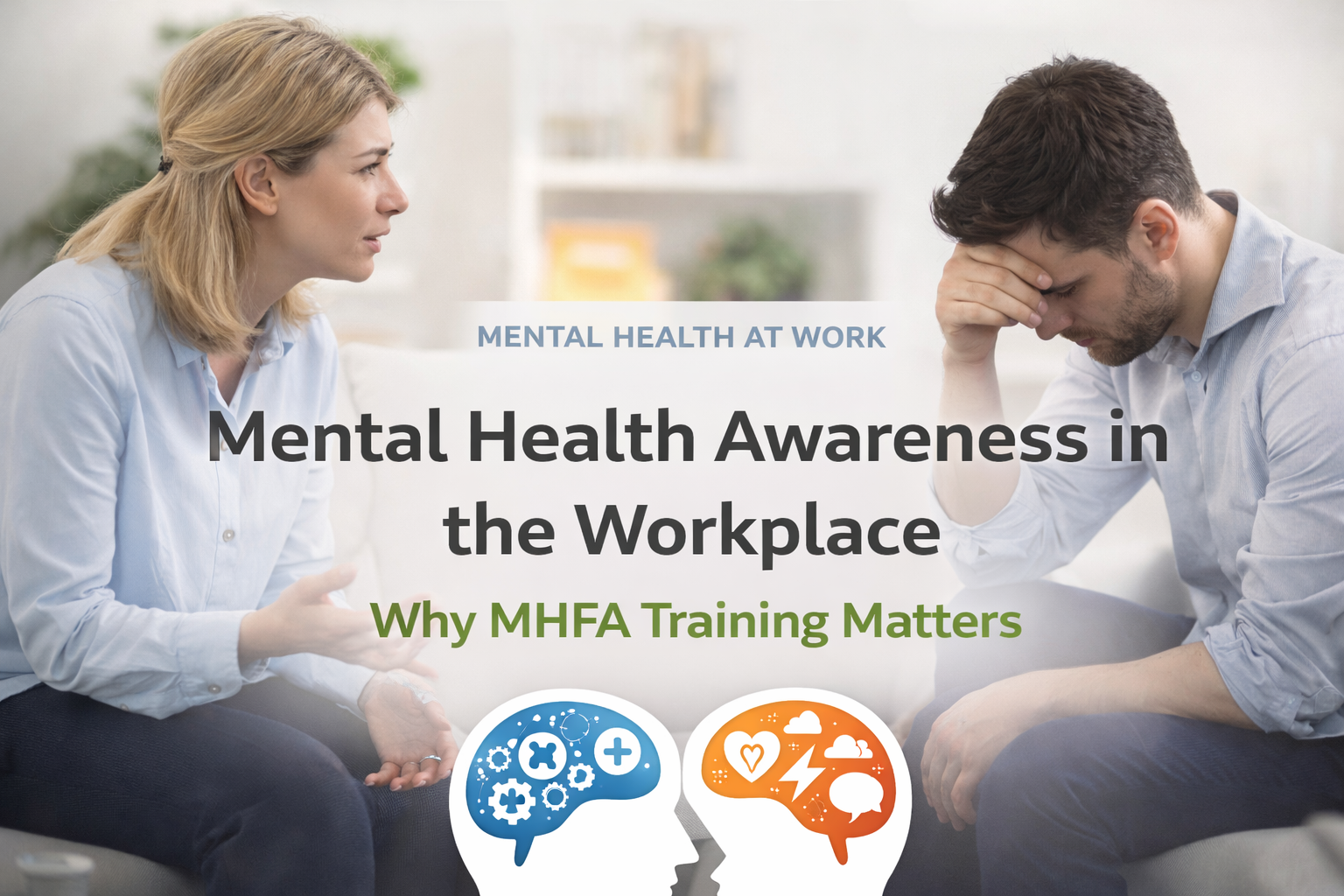
Mental Health Awareness in the Workplace:  Why MHFA Training Matters
Fire safety tips during the festive season
by Frans Bedford-Visser 23 December 2025
Stay Safe This Festive Season 🎅🔥